
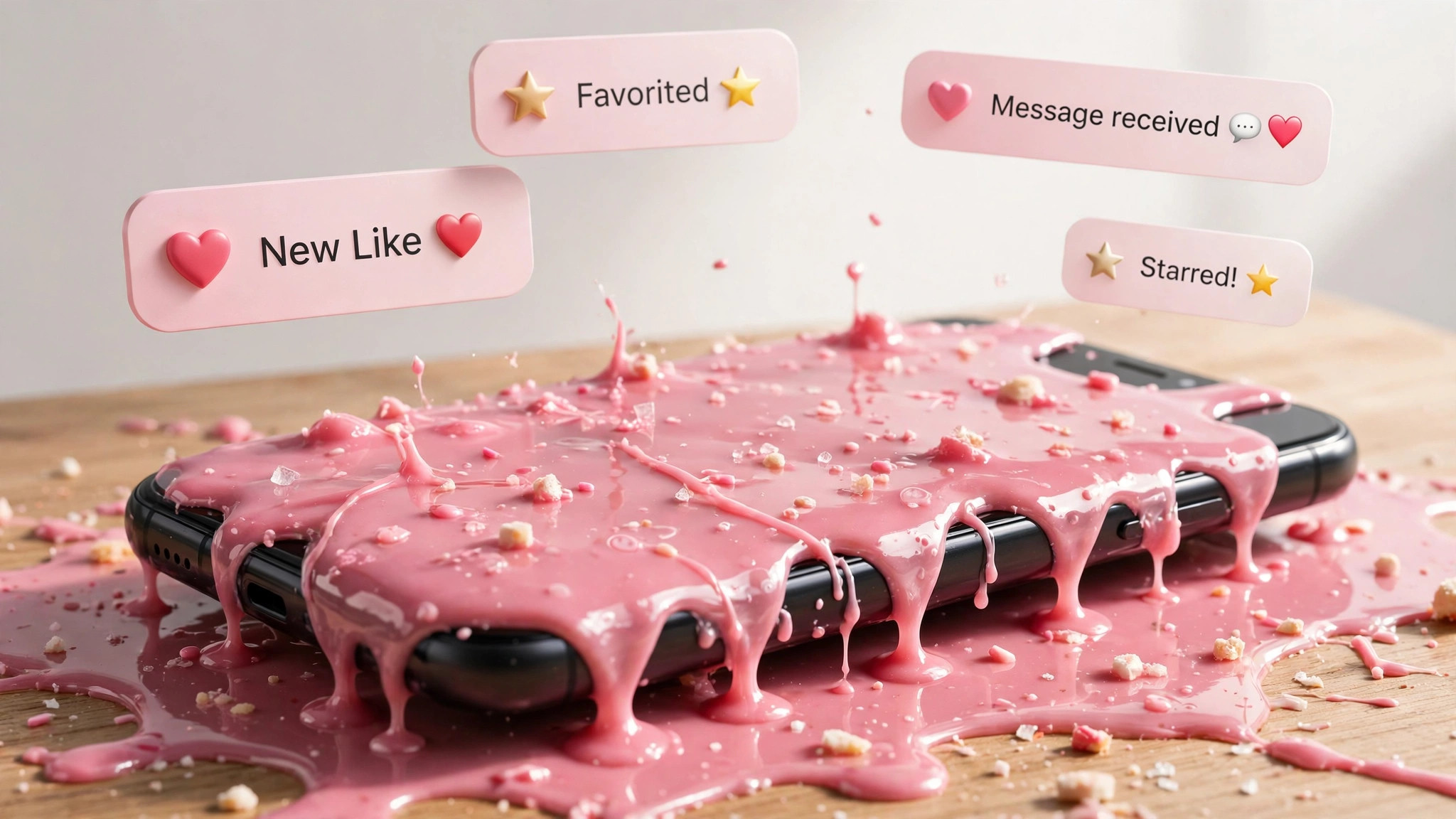
If someone in a TikTok comment section, a Twitch chat, or your group chat just told you to “stop glazing,” they were not talking about donuts. Glazing means showering someone with excessive, over-the-top praise — hyping them up so much that it stops sounding sincere and starts sounding like sucking up. The person doing it is called a glazer, and being called one is (usually) a joke, but never quite a compliment. Below, we explain where the word came from, how it is used, how it compares to similar slang like simping, and what to say when someone accuses you of it.
Glazing at a Glance
| Question | Quick Answer |
|---|---|
| What does glazing mean? | Praising or hyping someone excessively, to the point of seeming insincere |
| What is a glazer? | The person doing the over-the-top praising |
| Where is it used? | TikTok, Twitch, YouTube, X, gaming chats, and school slang |
| What does “stop glazing” mean? | “Stop hyping them up so much” |
| Is glazing an insult? | Usually playful teasing, but it does imply the praise is too much or not fully genuine |
| Where does the word come from? | The idea of coating something in a thick, sweet glaze — like icing on a donut |
What Does Glazing Mean on TikTok?
On TikTok, glazing describes praise that has gone past normal support and into exaggeration. One compliment is fine. Ten compliments, a paragraph defending someone’s honor, and a claim that they are the greatest to ever do it — that is glazing.
Dictionary.com defines the slang verb glaze as “showering someone or something with excessive praise,” and notes that it is usually viewed negatively because it implies the praise is insincere — that the person is just trying to suck up. Know Your Meme describes it similarly: over-complimenting and over-hyping someone to the point of cringe adoration.
Three things make praise count as glazing rather than a normal compliment:
- The amount. The praise is rapid-fire, repeated, or way longer than the moment deserves.
- The exaggeration. Everything is “the best ever,” “literally perfect,” or “nobody else comes close.”
- The blindness. The glazer defends the person no matter what — no criticism is allowed, ever.
Importantly, the person being praised does not have to be a celebrity. People get accused of glazing athletes, streamers, influencers, fictional characters, classmates, teachers, and even their own friends in the group chat.
Where Did Glazing Come From?
The literal word glaze means to cover something with a smooth, glossy coating — the icing on a donut, or the finish on a ceramic bowl. The slang borrows that image directly: a glazer coats a person in a thick layer of sweetness. On social media, the word is often paired with a GIF of a donut being glazed, and Dictionary.com sums the metaphor up neatly — when you are glazing, you are “laying the sweetness on thick.”
As for the slang itself, Know Your Meme traces its first known uses to late 2021. According to the term’s creators, who spoke with Know Your Meme in December 2022, “glazing” started in a Discord server they helped run, where messages using the word appear from November 23, 2021. The first known use on Twitter (now X) followed on November 24, 2021, when user @ratthws described someone as “glazing.”
The term then broke out on Twitch in 2022, where big streamers such as Kai Cenat, xQc, and Adin Ross used it constantly — viewers would spam “glazing” in chat whenever a streamer praised someone too hard. From Twitch clips, the word spread to TikTok, YouTube, and X, and by 2023 it was everywhere. It has since become so mainstream that Merriam-Webster now lists the slang sense of glaze: “to praise excessively or obsequiously.”
What Is a Glazer?
A glazer is simply the person doing the glazing — the one handing out the excessive praise. Merriam-Webster even lists “glazer” as the noun form of the slang verb.
You will usually see it used like this:
- “He’s such a glazer — he thinks that player can do nothing wrong.”
- “Bro is a professional glazer at this point.”
- “Ignore her, she’s glazing again.”
Being labeled a glazer suggests you have lost your objectivity: you are not evaluating the person anymore, you are worshipping them. That said, plenty of people now use the label on themselves as a joke. Self-aware glazing has become part of the humor, and you will regularly see people start a compliment with “not to glaze, but…” or “call me a glazer, but…” before saying something genuinely nice. Acknowledging the glaze first has become the socially acceptable way to give a big compliment.
Glazing Examples: How the Word Is Used
Glazing shows up in short, punchy comments rather than long explanations. Here are the forms you are most likely to run into:
| Phrase | What it means | Typical context |
|---|---|---|
| “Stop glazing” | Stop hyping them up so much | A friend praising someone for the fifth time |
| “He’s glazing” | He is over-praising someone right now | Sports fans, streamer fans |
| “You’re glazing” | Your praise has gone too far | Teasing reply to an exaggerated comment |
| “Glazer” | A person who always over-praises | Nickname for a superfan or a suck-up |
| “Not to glaze, but…” | “I know this sounds like a lot, but…” | Starting a big (genuine) compliment |
| “The glazing is crazy” | The praise in this chat/comments is out of control | Twitch chat, TikTok comments |
A typical exchange looks like this: one fan comments, “He is literally the greatest player of all time, nobody is even close, he has never made a single mistake,” and the replies instantly fill with “stop glazing” and donut emojis. The joke only works because everyone in the thread recognizes the pattern.
Glazing in Sports, Gaming, and School
Glazing is not limited to one corner of the internet — it thrives anywhere people have favorites.
Sports fandom is probably the word’s biggest arena. Fans who treat a player as flawless get called glazers by rival fans, and sports debates online are full of accusations that the other side is “glazing” their star. The charge is less “you are wrong” and more “you are too biased to see straight.”
Gaming and streaming is where the word grew up. In Twitch chats, “glazing” gets spammed whenever a streamer over-praises a pro player, a game, or another creator. The same callout style fuels other hype-heavy slang — if a clip is full of perfect-play bragging, you will often see it captioned with phrases like the ones we break down in our Green FN meaning guide.
School and everyday life is where glazing has landed most recently. Students use it for anyone sucking up to a teacher, over-complimenting a friend’s crush, or defending a classmate a little too passionately. Like a lot of fast-moving slang, it can be hard to keep up with — the same is true of compact texting terms, which is why we also explained PMO meaning and other trending phrases.
Glazing vs. a Genuine Compliment: Where Is the Line?
This is the question underneath most searches for the term, because nobody wants to be told their kind words were actually an insult. The difference is not kindness — it is proportion and honesty.
A genuine compliment is specific, brief, and believable: “That presentation was really well organized.” You said what you liked, and you stopped.
Glazing is the same compliment with the volume turned all the way up: “That was the greatest presentation in the history of this company. Nobody here could ever do what you just did. You’re literally a genius.” It keeps going after the point is made, it exaggerates beyond credibility, and it often sounds like the speaker wants something — favor, attention, or to be noticed by the person they are praising.
A quick self-test: if your praise would still make sense with the exaggeration removed, it is probably a compliment. If removing the exaggeration leaves nothing, you were glazing.
Glazing vs. Simping vs. D***riding
Glazing belongs to a family of slang terms about doing too much for someone, but they are not interchangeable.
| Term | Meaning | Key difference |
|---|---|---|
| Glazing | Over-the-top praise and hype | About compliments and public hype; usually playful |
| Simping | Doing way too much for someone you are romantically interested in, often with no interest back | Driven by attraction; about actions and devotion, not just praise |
| D***riding | The crude, older term glazing largely replaced; obsessively praising or copying someone | Much more vulgar and more hostile; glazing is its cleaner, joking descendant |
| Meatriding | A variant of the above with the same meaning | Equally crude; glazing is the school- and stream-safe version |
The short version: if it is about praise, it is glazing. If it is about romantic devotion, it is simping. And glazing is the word that won out in public spaces precisely because it gets the same message across without the profanity of the older terms — which is why teachers and streamers can say it, and why it ended up in dictionaries.
How to Respond When Someone Says You’re Glazing
Most of the time, “you’re glazing” is teasing, not an attack — and the worst response is getting defensive. Here is how people usually handle it, depending on the situation:
- Own it as a joke. “And I’ll glaze again, he’s the GOAT.” Playing along is the most common (and funniest) response, especially among friends and in fandoms.
- Use the self-aware opener next time. Starting with “not to glaze, but…” signals you know how it sounds, which defuses the callout before it happens.
- Shrink the compliment. If you were genuinely overdoing it, laugh and dial it back: “Okay, fair — he had a great game, that’s all I’m saying.”
- Check the context. In a friendly chat, laugh it off. But if a teacher, coach, or coworker says your praise sounds like sucking up, take the hint seriously — outside of slang spaces, the behavior it describes (visible, excessive flattery) can actually hurt how people read your intentions.
What not to do: do not respond by praising the person even harder in the same breath. That is, by definition, more glazing.
Is Glazing an Insult?
Mostly, it is a teasing callout rather than a serious insult. Know Your Meme notes that getting called a glazer “is not a compliment,” and the word does carry a real edge: it implies your praise is excessive, biased, or not fully sincere, and that you have made yourself look a little too devoted.
But context decides everything:
- Between friends or in a fandom, it is banter — often said with laughing emojis, and frequently aimed at people who are clearly joking themselves.
- In an argument, it becomes a dismissal: “you’re just glazing” is a way of saying your opinion does not count because you are too biased.
- Self-applied, it is pure humor — “professional glazer” bios and “glazing, sorry” comments are everywhere.
So being accused of glazing is rarely something to take offense at. It is slang’s way of keeping praise honest: admire who you like, just do not lay it on so thick that nobody can tell whether you mean it.
The word has spread so fast that a Reddit thread on r/answers asks whether it is weird that everyone says “glazing” now, describing it as being effusively positive about something.
Frequently Asked Questions
What does glazing mean in simple words?
Glazing means praising someone way too much — hyping them up with exaggerated compliments that sound insincere or obsessive. Think of coating a person in praise the way icing coats a donut: thick, sweet, and all over.
What does “stop glazing” mean?
It means “stop over-praising them.” It is usually said as a joke or a playful callout when someone has complimented or defended a person one too many times in a row.
What is a glazer?
A glazer is a person who glazes — someone known for excessive, over-the-top praise of a favorite athlete, creator, celebrity, or friend. Merriam-Webster lists “glazer” as the noun form of the slang verb glaze.
What is the difference between glazing and simping?
Glazing is about exaggerated praise and hype, and it can be aimed at anyone — an athlete, a streamer, a classmate. Simping is about doing too much for someone you are romantically interested in. Glazing is words; simping is devotion.
Is glazing a bad word?
No. Glazing itself is a clean word — it is the family-friendly replacement for cruder slang with the same meaning. It is mildly insulting as a joke (it calls your praise excessive or insincere), but it contains no profanity and is fine in most casual settings.
Where did glazing come from?
The slang started in a Discord server in November 2021 and got its first known Twitter/X use on November 24, 2021. It spread through Twitch in 2022 via streamers like Kai Cenat, xQc, and Adin Ross, then took over TikTok — and it has since been added to Dictionary.com and Merriam-Webster as a slang sense of glaze.
Conclusion
Glazing is Gen Z slang for praise that has gone too far: the excessive, exaggerated, slightly insincere hyping of a person who can seemingly do no wrong. It comes from the image of coating someone in a thick, sweet glaze, it was born in a Discord server in late 2021, and it spread through Twitch and TikTok into everyday language — official dictionaries included. Now you know what it means, what a glazer is, how it differs from simping and a normal compliment, and how to laugh it off when the accusation comes your way. Just remember the golden rule the slang itself teaches: a compliment lands best when people can tell you actually mean it.